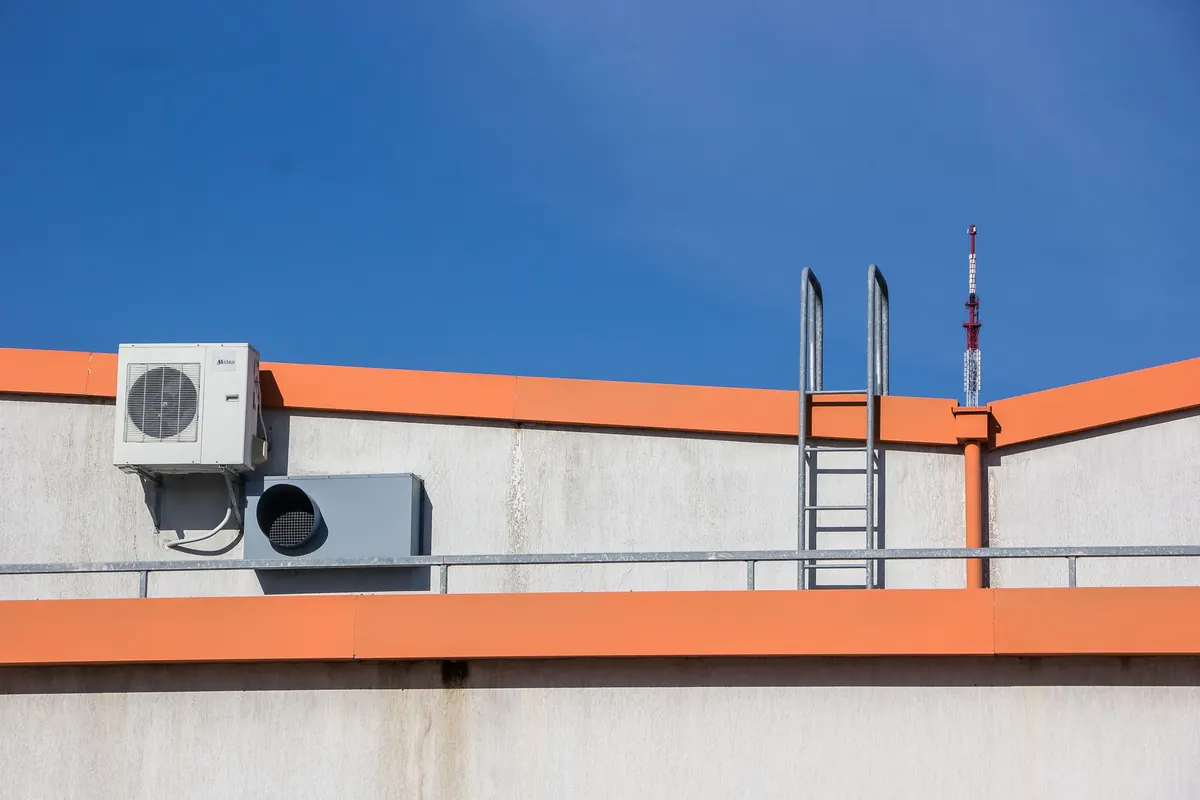
An August heatwave is rarely a surprise, yet it still catches data centers flat-footed every year. The forecast shows up on Monday, the hall runs hot by Thursday, and somebody is standing in a hot aisle at 2 a.m. asking whether the standby chiller was ever load-tested. The work that keeps a facility stable during a 40°C week gets done in May, when the weather is boring and there is time to fix what you find.
What follows is a practical pre-summer pass: setpoint discipline, thermal mapping, backup cooling, water, and an escalation path the night shift can actually follow.
Setpoints: decide the numbers before the heat does
Many halls still run the CRAC supply setpoint chosen during commissioning years ago, often 20°C or lower. That is usually colder than the IT equipment requires. ASHRAE's recommended envelope for Class A1 equipment allows inlet temperatures up to roughly 27°C, and higher supply temperatures generally mean less compressor work and more hours of free cooling.
Raise setpoints in steps of 0.5°C to 1°C over several days, and watch rack inlet temperatures, not return air. Return air tells you what the room is doing; inlet temperature tells you what the servers are experiencing. It also helps to revisit humidity limits. If the equipment specification does not require tight humidity control, a low-humidity threshold set out of habit can have humidifiers running all summer against a load that does not need them.
Watch the deadbands
Small conflicts cost energy in July. A CRAC trying to cool to 21°C while its humidifier holds 45% RH will fight itself for weeks. Check whether cooling and humidification are working from the same assumption about the room.
Thermal mapping: know where the heat will land
Walk the hall on a warm afternoon with an infrared thermometer and a notebook. Log the inlet temperature of every rack at the bottom, middle and top. The top of a rack — often around U42 — is usually the hottest point, because hot air pools there and recirculates over the top of the cabinet.
The goal is to find your worst ten racks before the weather does. Anything running five degrees above its neighbours is a candidate for a fix that takes twenty minutes:
- Fit blanking panels in every empty U, including the top and bottom gaps.
- Seal cable cutouts in the floor and overhead trays with brush strips or grommets.
- Check that containment doors, end panels and roof panels actually close and latch.
- Confirm perforated tiles sit in cold aisles, not under cabinets that need no airflow.
- Verify underfloor static pressure and that no tiles have been lifted and forgotten.
Fix what you can, then re-measure. A mapped hall gives you a baseline to compare against on the day the temperature alarms start firing.
Backup cooling: test it while the weather is boring
A standby chiller that has not started since last September may not start in August. Run every redundant unit under load, including pumps, tower fans and adiabatic or evaporative units. Where spot coolers are part of the plan, confirm they are serviceable, fuelled or powered, and that their exhaust will not simply recirculate into a cold aisle.
Mechanical redundancy is only half of it. Load-bank the generators, verify automatic transfer switch timing, check fuel quantity and quality, and confirm that a fuel delivery can be scheduled within a day. Battery rooms deserve their own line item: UPS battery life falls away quickly above roughly 25°C, so a battery room running hot is a replacement bill with a delay on it.
The time to discover a standby chiller will not start is not the afternoon the utility issues a peak-demand notice.
Water use: the constraint that shows up second
Evaporative cooling consumes water, and a heatwave makes it worse. As wet-bulb temperatures climb, tower approach temperature deteriorates, so a tower that delivered 29°C water in June might deliver 33°C in August. Same tower, same pumps, less heat rejection — and more makeup water to get there.
Before summer, check sump levels, makeup water supply, overflow and drain lines, and whether the site has a realistic reserve if supply is interrupted. If the facility depends on municipal water, understand local restrictions ahead of time and have a plan for them: pre-cool overnight when ambient temperatures and grid conditions are friendlier, shift batch workloads, and identify loads you can curtail without breaching customer commitments.
Water treatment and any associated Legionella risk management should be handled by qualified contractors. Do not improvise chemistry in July.
Alarms, staffing and the escalation ladder
A high-temperature alarm set at 27°C will fire legitimately dozens of times during a heatwave. That is not useful. Adjust thresholds before summer, separate warnings from critical alerts, and make sure the person receiving an alert can distinguish one rack in a dead zone from a whole hall losing cooling.
Staffing matters too. A single on-call engineer fielding calls alone is how small problems become outages. Build a roster with at least two people reachable per shift, and brief them on the hall's known hot spots and the fixes already staged.
Write the escalation ladder down and keep a printed copy near the door. The BMS may be the first thing to misbehave. A workable sequence:
- Verify the reading — check sensors against a second source and confirm whether the issue is one rack or a zone.
- Apply local fixes: blanking panels, containment, staged spot cooling, redirected airflow.
- Bring every redundant cooling unit online and raise setpoints within the pre-approved band.
- Shed non-critical load: batch jobs, test environments, powered-but-idle kit.
- Notify stakeholders and, if needed, start controlled shutdown of non-critical IT rather than letting it trip.
- Call the mechanical contractor and escalate to facilities leadership.
The week before the heat arrives
Most of the value is in the last week. Confirm vendor response times and get them in writing, schedule fuel and water deliveries earlier than usual, stage portable fans and spot coolers where they can be reached quickly, and print a contact list that includes after-hours numbers for the chiller and tower contractors, not just the account manager.
Then brief the team: what the trigger points are, who decides to shed load, who talks to customers. Ten minutes now saves an hour of confused phone calls when the hall is at 32°C and rising. Heatwaves are predictable. Treat them that way, and the summer becomes a series of boring afternoons.
Photo: Alexey Baikov / Pexels